 searchingtosee
reaching for star dust
Posted on June 26, 2015
I love photographing seed heads. It’s a mild obsession of mine. They are a popular subject these days, it seems, appearing on everything from kitchenware to lino prints. I’m a big fan of Angie Lewin’s lino cuts especially. I think it is a bold simplicty in their structural form, and an unassuming elegance which makes them so enticing and lends itself so well to so many different media. I have always felt like they are beseeching in some way; offering up their fragile form to the wide open sky. To me, they have become a symbol of the infinite, innocent generosity of nature’s gentle rhythm.
Usually, I would reach for the macro lens and get in close (as I did here, here, here, and here again!), but I decided to try out my rollei with some black and white medium format shots for a different perspective, still keeping the aperture as wide as I could. Unfortunately I had a bit of a light leaking incident, which is why the last image has a flecked, slightly grainy appearance (the film was fine grain), but I decided not to correct this. I quite like the otherworldly effect. It’s a bit like a meteor shower, or some other celestial phenomenon. As if their willowy limbs are tentatively reaching out to greet a scatter of star dust.


© images and words by Emily Hughes, 2015
And then, Kittens playing
Posted on June 15, 2015
‘The journey of the photograph had, at some point, become a travelling album of its adventures’ – love this idea! Thanks to photographic artist Alex Bishop-Thorpe from all the way over in Australia for his contribution to the journey, and his musings on the subject of the photograph as material object. Enjoy! Emilyx

I learned of the Journey of a Photograph Project from my friend Nicole, who I met while we were both kicking around as Artists in Residence at The Banff Centre earlier this year (Hi Nicole!). In the rest of my real life I’m a photographic artist from Australia, and my work deals with a lot of that weirdness that comes along with the photograph being a physical thing you can hold, and how bizarre it is that we have spent so many generations creating and destroying little worlds in our hands that we just think of it as normal. It’s kind of like how absurd dreaming is.
In 2012 I co-founded a darkroom and photographic facility with fellow artist Aurelia Carbone, which has since provided all kinds of excuses to explore this subject in parallel with my arts practice. The work I make is mostly analogue in nature because I…
View original post 577 more words
how to make a daisy chain
Posted on June 1, 2015
First off, I’m sorry for the misleading title (it is about daisy chains, but there is no set of instructions I’m afraid). And whilst I’m at it, I would also like to apologise to regular readers especially for the overload of family pictures recently. I hope it’s not all too saccharine for your tastes (but you know I can do acerbic just as well as I can do sweet, I think). It has just struck me with some force, this spring holiday, how they are at such a magical age; on the cusp of knowing, discovering the world – their world – through their own eyes as they are. So many questions and misunderstandings tumbling from their tongues. At once categorically assertive and desperately unsure. I’m painfully aware also, as they bow their heads and giggle about private jokes and shared experiences which are theirs and theirs only, how much I am no longer a part of that; how every troubled thought, or stubbed toe nail no longer requires a kiss and a cuddle and soothing words as they learn to regulate their own emotions. Don’t get me wrong; I’m also glad for this. Very glad, that they are learning to forge the paths of their own world and navigate through thorny issues like fears and friendships. But along with that comes a distance. A gap. Only small just now, and still easily overcome when troubles spill over into tears and I am needed. But it is there in the closed bedroom doors and the occasional quiet withdrawal of hands from mine. In the silences to my many questions about their day. And then there are the rolled eyes, the But mummy, you wouldn’t understand, and Don’t take that tone/attitude with me! altercations which are now part of our daily patter.
But still they want the hugs, and sometimes stories at bedtime. Still they want to laugh and dance, and share silly jokes with us at dinner time, even though I’m embarrassing in front of their friends. So those precious in-between moments – the ones without the sulks and the temper tantrums and the arguments and when I’m not so tired I don’t have the energy (and then I kick myself for missing them) – I just need to reach out and snatch them, every so often, and hold them close by to my heart. I guess the camera is just the way I know how to do that.
So, last week, we were enjoying the beautiful spring weather at their great-grandfather’s house in London. His unkempt garden had a rich crop of fine looking daisys, so my seven year old asked me to help her make a daisy chain, since she didn’t know how. I thought, Oh my goodness I can’t believe you don’t know how? It seems like something every seven year old girl should *just* know how to do. And then I realised, how would she know if no-one showed her? So I did. And we had fun picking the strongest, tallest specimens. I took pictures, and then after a while on her request I put the camera away, and we carried on until the sun got too warm and we went off to find some shade.
There may be some kind of tenuous connection in all of that, between daisy chains, life, family and instructions, or lack of. But it’s a bit hazy. And I’ve never really been one for tying up the lose threads into a perfect bow. I’m happy to leave some questions unanswered, and accept that sometimes problems cannot be neatly solved, like algebra. Life is a bit like hair, really (those of you who are female and/or have daughters will appreciate this) – no matter how hard you try to create the perfect style and tie it up all neatly, after a while some tendrils will always work their way lose. And really, in the end, it doesn’t matter at all.


Edited to say: I intended to post this over a month ago, just after the Easter holidays, and somehow it never made it past ‘draft’ version. So apologies for the delay! I’m so jealous of that sunshine now as I type with my thick fleecy socks on, and a hot water bottle in my lap!
© images and words by Emily Hughes, 2015
full of the joys
Posted on April 10, 2015
Jostling, whirring and bouncing in to town. A pair of dizzy bumble bees on the first sunny day of spring!

© images and words by Emily Hughes, 2015
Happy Easter
Posted on April 5, 2015
Happy Easter everyone!
Oh, and WordPress tells me that today is my 3 year blogging anniversary, so happy anniversary to me! 🙂
I’m looking forward to a day of eating and relaxing with my family. This adorable photograph is an old one of Alex’s, which I turned into a greeting card last year for Easter.
Hope you’re all enjoying the bank holiday!
Emilyx

© image by Alex Hughes, 2012
Zooming In and Zooming Out
Posted on April 2, 2015
Next stop Germany… check out Andreas’ (who blogs prolifically: http://asifoscope.org/, https://kellerdoscope.wordpress.com/, https://creativisticphilosophy.wordpress.com/) fascinating contribution to the journey. As the project gathers momentum; layers of history and memory as well as a few aesthetic alterations, Andreas gives us some insights into his own family history.
Emily

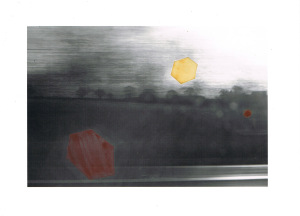
Nerve impulses running down the spinal cord, triggering muscle cells – mitochondria pumping protons and electrons to provide the energy to move a muscle. The muscle contracts and the fingertip touches the release button, triggering a cascade of electronic signals, calculations, movements of electromechanical parts, chemical reactions inside a battery, a shutter opening, photons flashing inside and triggering chemical changes in the particles of the film. A myriad of smallest and shortest events and processes combine to produce that short “click” that indicates that a picture has been taken. The photographer looks away and her mind and eye turn on something else.
A short moment in her life. The moment she pressed the trigger of her camera. Clouds, trees or bushes, houses, the horizon, the sun. Motion blur. Lens Flair.
The photograph was shot while in motion, maybe from a train or a car. The hexagonal spots of lens flair…
View original post 2,852 more words
the little things
Posted on March 25, 2015
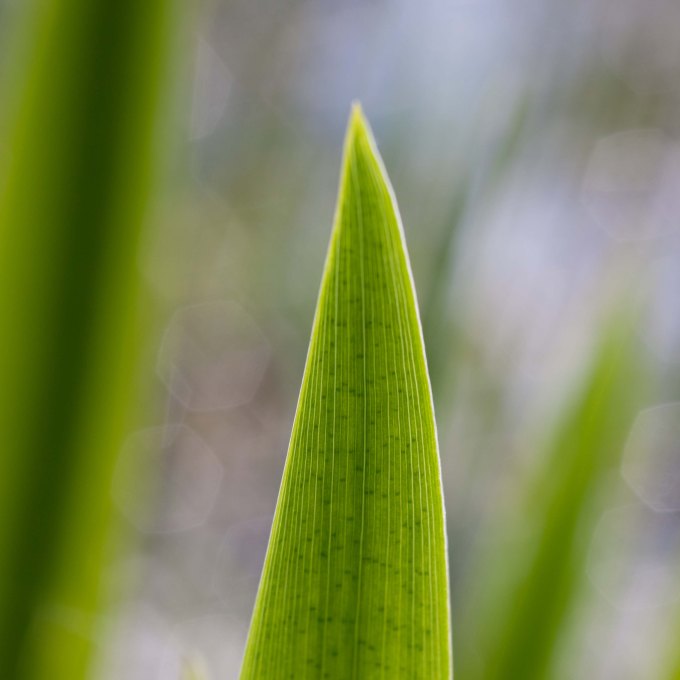
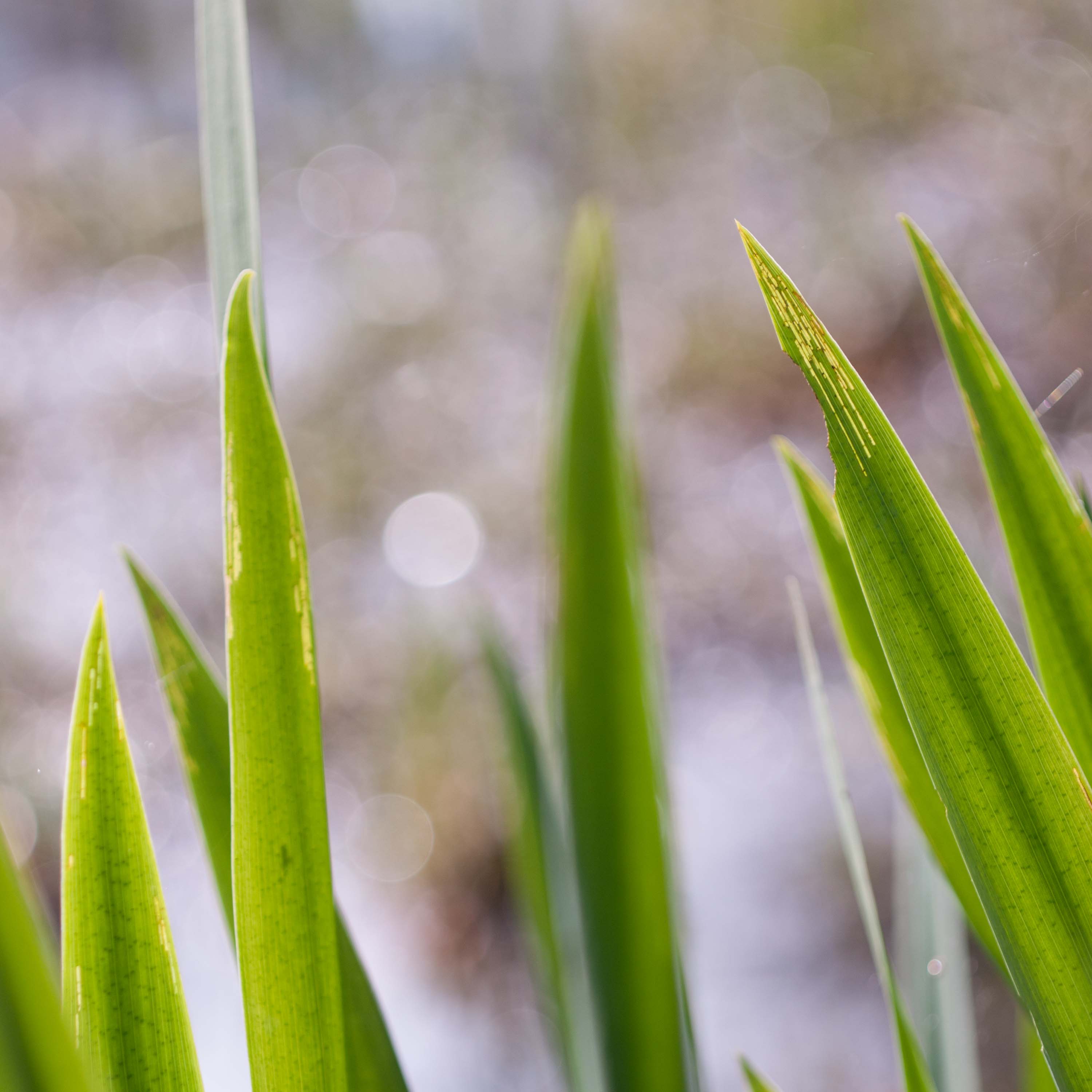
I love macro photography. It forces you to slow down, and take notice of what is around you. There is something really so wonderfully involved about focussing in on the minutiae of life. It’s a bit like discovering a secret world – the more you delve into it, the more you want to explore.
And suddenly something as small and insignificant as a blade of grass can take centre stage, and become, well, a thing of pure wonder.



© words and images Emily Hughes, 2015
tell me a story
Posted on March 14, 2015

© Robert Frank, Mabou 1997 – image reproduced at Mutual Art
opening line
Stories are necessary, enchanting, evocative things; but they can also be the means by which our dreams are traduced or defused, defiled or filed away. We learn to read sideways. We learn to read by the light of secret planets and signs.
Excerpt taken from From one state to the next by Ian Penman (included in the forward to Robert Frank, Storylines)
One of the things I love most about blogging is the opportunity it provides to make connections with so many other creative and inspiring people. I remember vividly the excitement of starting this blog four years ago; gaining followers, having people comment on my pictures for the first time, discovering other like-minded bloggers. I posted a series of pictures my husband and I had taken in a house in Italy, and a fellow blogger (writer) asked if he could pen some words to them as a writing prompt, and so an artistic collaboration evolved with Nathan from The Whole Hurly Burly. I was curious to see what he would come up with, and it was indeed a fascinating process seeing your own pictures take on new meaning through somebody else’s eyes. It was good, from my part, to know that a collection of pictures which I had put together had the possibility of narrative, and that they could not only tell a story, but provoke an emotional response, and one which had resonance.
Sometime later I found the courage to instigate another artistic collaboration on a larger scale when I imagined the journey of a photograph project. A humble forgotten photograph has taken on new life, weaving words, stories and memories in its flight around the globe.
I remember the exact moment when I realised that exploring narrative in photography was something not only important but necessary, and that combining words with images was what I wanted to aspire to do in my own photography. It was when I went to see the Storylines exhibition at the Tate Modern in 2004.
Frank is a storyteller; he attempts to convey narrative and sequence in his work employing not just photography but text – sometimes just single words and images, sometimes scratching the words into the surface of the negative – as well as video and film to create a dialogue (although more recently he has focussed exclusively on still photography). His later more experimental autobiographical work (and especially his polaroids and Mabou series from his home in Nova Scotia) for me is extremely powerful; saturated with emotion and complex layers of meaning. Photographs are grouped together haphazardly, peppered with random words sometimes scratched angrily or smudged. Fragments of writing, like diary entries, sometimes typed or handwritten are cut and pasted onto sets of images, creating crude collages which further add to an impression of fear, confusion, but also of profound sadness. There is so much to look at and explore in this work which reads like an expulsion, an exorcism even, of inner torment.
Although his later work never received the critical acclaim of the earlier projects such as The Americans (perhaps because it is less accessible?) I found it very moving. It speaks (to me) and tells the story of a deeply disturbed state of mind. Of a man who is broken.


One for a boy, one for a girl.
Strong and tall and vibrant.
Remnants.
From the earth, which fed us.
A simple, hearty supper shared amongst friends.
And then, to the earth it returned.
Well, she ate, and enjoyed her meal.]
*********
This blog post is a re-working of two previous blog posts; words and pictures, and the feathers.
The feathers is also available to purchase as a limited edition print from my artfinder shop.
© words and images Emily Hughes, 2015
onwards
Posted on March 11, 2015
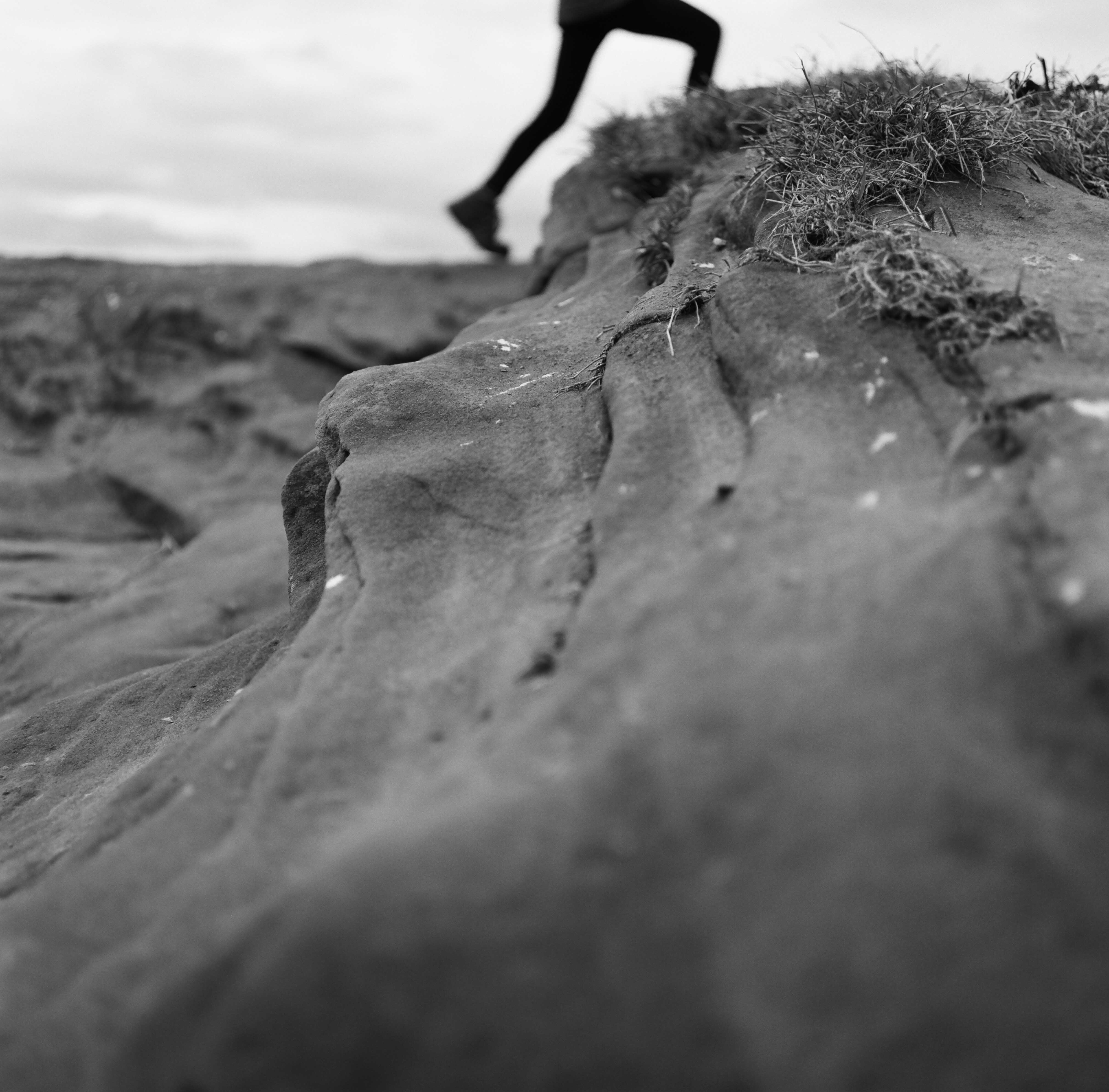
So, I’ve been running a lot lately, which (partly) explains my sporadic posting. I’m not really a runner. I have set myself a lot of goals in my life, but never physical ones. Physical exercise is not really my thing, and it’s making me pretty exhausted a lot of the time. Still, even though it is hard, tiring, sometimes quite monotonous, and there’s the whole thing of fitting it in to your already packed schedule, there is a strange compulsion in me to run at this stage of my life. I can honestly say I never really felt like running much before. I used to be one of those people who looked on at those red-faced joggers with pity. But now, as I approach the end of my 3rd decade, I am one of them. I get it. It feels like something I absolutely must do.
I like the way it makes me feel. Aside from the health benefits, I like the way my body finds a gentle bobbing rhythm, and when you hit that sweet spot it sometimes becomes something quite effortless. I like the fact that I can pretend like I’m running away, but then I always come back home (and usually in a better mood). I like that running gives me space to listen, to think, and process. I like feeling my heart pump harder and louder. I like that it makes me sweat. I like having run; the way my legs feel tight and fizzy (and that post-run shower feels oh so good). I like that my children and husband cheerfully wave me off with pride every Sunday morning. I like my muddy, slightly battered running shoes – I feel every hard-earned mile in their soles.
I will never understand though, why some days it feels like I’m wafting along on a gentle breeze, admiring the scenery and smiling serenely at dog walkers, whilst on others my face is a scowl of concentration, I can’t smile for puffing, and my feet seem to jar with the pavement. On those days every single kilometre I chase is a hard slog. I have been surprised too about how many emotions are stirred up when I run. Sometimes I find myself crying.
In April I shall be attempting to run the London Marathon. A thought which fills me with terror and excitement in equal measure. I hope I shall continue to run after that, if I feel the need.
But for now, onwards, and forwards feels like a good direction to be going in.
Edited to say: I shall be running in support of The Lily Foundation, a charity which funds research into mitochondrial disease; a metabolic disorder for which there is no cure. If you are interested to learn more about mitochondrial disease and how mitochondria affect our body please watch this informative video.
© words and images Emily Hughes, 2015




 searchingtosee
